
NSF AI4OPT kicked off a new phase at its mid-November annual retreat in Atlanta, bringing the Institute’s research community together to turn its five-year, $20 million U.S. National Science Foundation (NSF) funded renewal into a polished plan for what comes next.
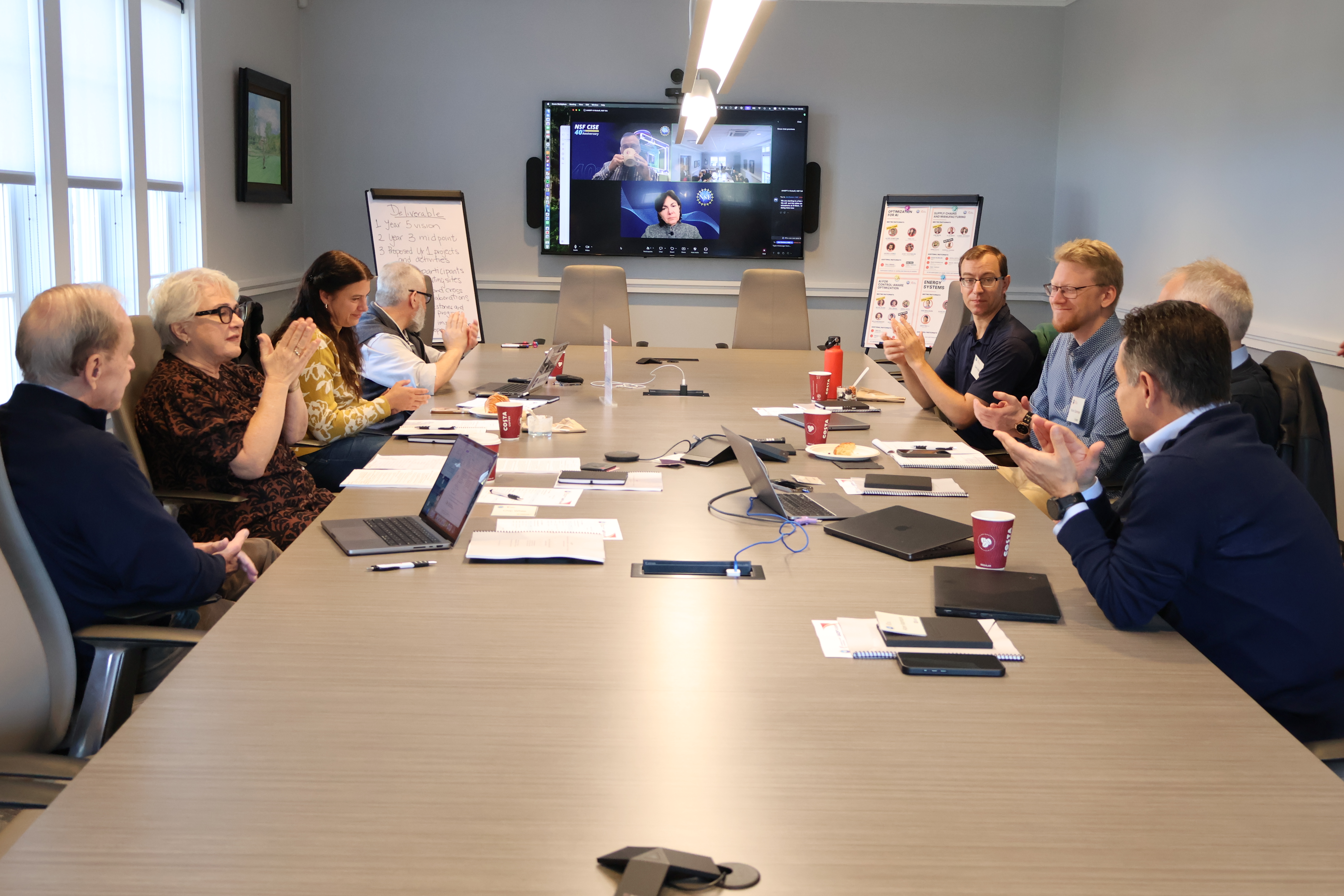
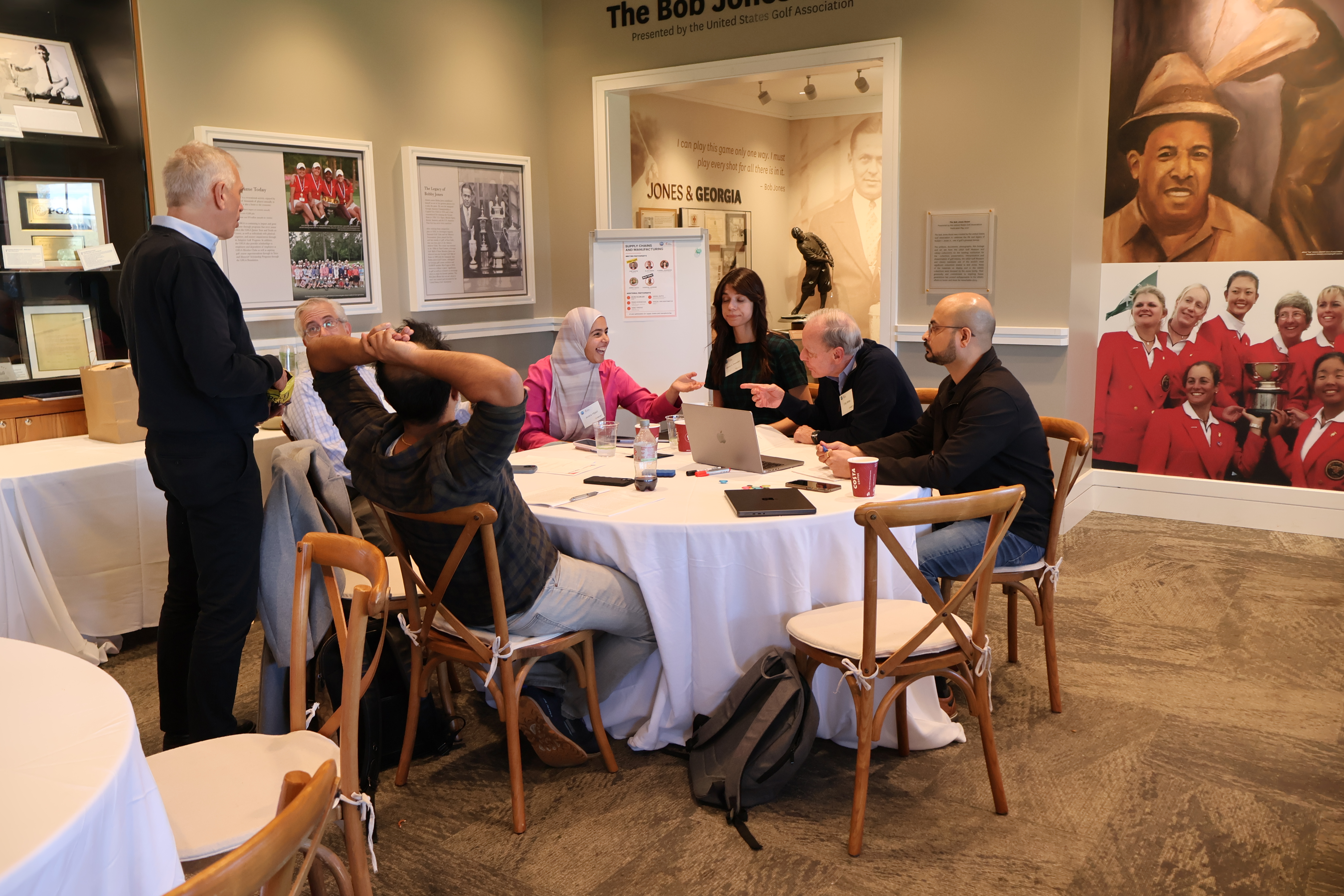
The work started with a welcome from NSF, followed by a three-hour meeting between AI4OPT leaders to set expectations for the Institute before diving into a four-hour planning session with senior personnel and research faculty. Each of the two research pillars, Optimization for AI and AI for Optimization, and two application groups, Energy Systems and Supply Chain and Manufacturing, developed their vision for AI4OPT's next chapter by setting 1-, 3- and 5-year goals.
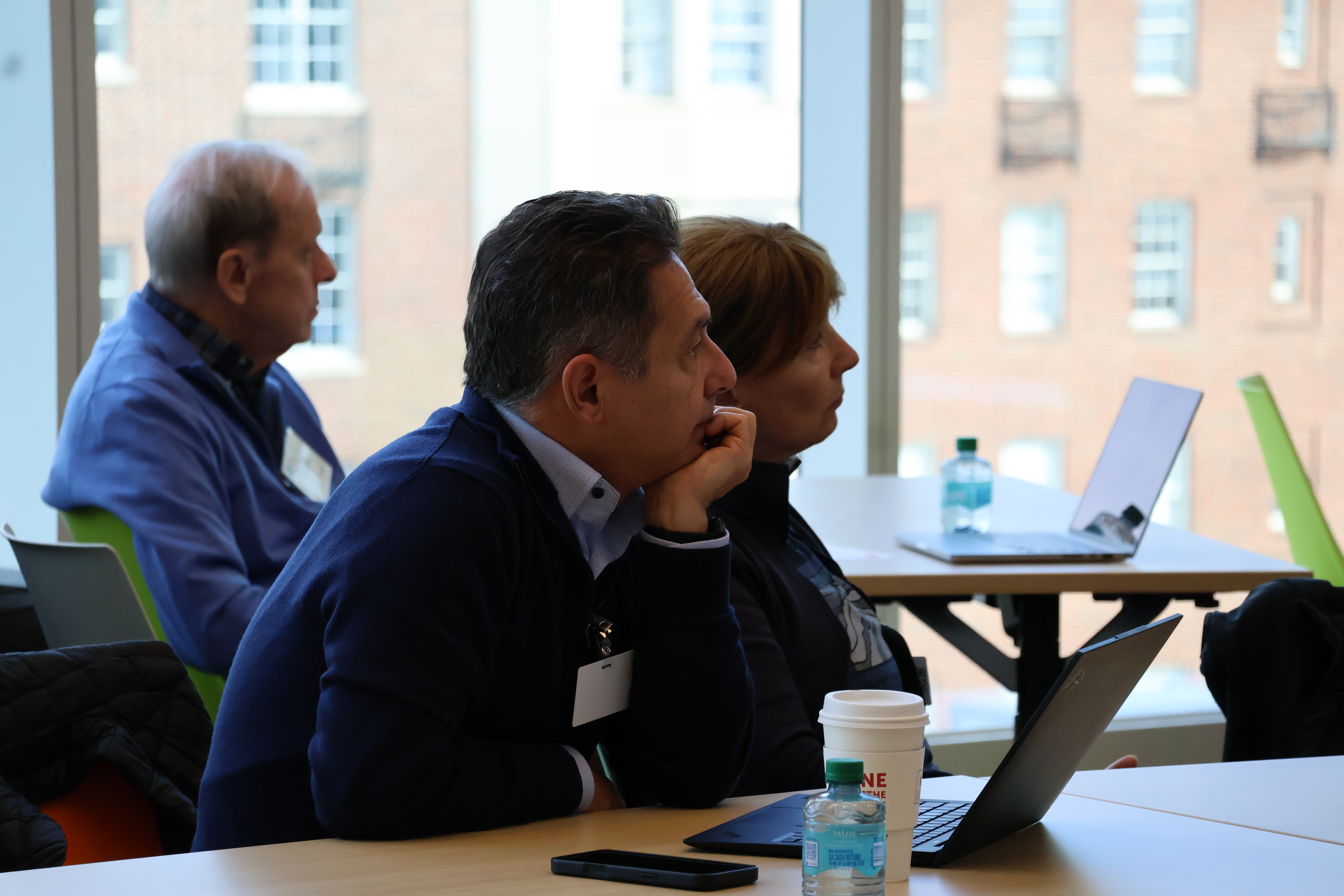
The next morning, those plans were presented by each lead to the broader AI4OPT community during the AI4OPT-II Vision session, followed by a Q&A.
Defining the Next Five Years
The next five years will expand AI4OPT’s focus on real-time and interactive optimization, with an emphasis on developing scalable, efficient and trustworthy approaches to complex decision-making. The research combines artificial intelligence, mathematical optimization and new computer architectures, with applications in energy systems, supply chains and advanced manufacturing.
The research is organized around complementary efforts in AI and optimization. Bistra Dilkina (University of Southern California) leads the AI for Optimization pillar, which uses AI to tackle increasingly complex optimization problems, while Alper Atamtürk (University of California, Berkeley) leads the Optimization for AI pillar, focusing on developing new optimization models and methods for next-generation AI systems.
“Our vision for Phase II is to design learning around the structure of the end-use system and the decisions the learned model will support. This approach can produce models that are smaller, cheaper to train, explainable and trustworthy enough to operate within real decision pipelines. In five years, success for AI4OPT would mean demonstrating in power systems and supply chains that better AI does not have to mean bigger AI,” said Atamtürk.
Those advances will be tested against complex, real-world challenges. In energy systems, Dan Molzahn (Georgia Tech) leads work applying AI and optimization to increasingly large and detailed power system decisions.
"Our Phase II vision is to enable power system decision-making at arbitrary scale and accuracy: Whatever level of temporal, spatial or modeling detail a planner needs, our methods should be able to efficiently solve the problem. Working with our research pillars and industry partners, we will apply these advances to emerging energy challenges and expand educational opportunities in electrical engineering and computing,” said Molzahn.
In supply chains and manufacturing, Chip White (Georgia Tech) is focused on translating those advances into faster, more resilient decision-making across operations, planning and strategy.
“Our Phase II vision is to expand AI4OPT’s impact on supply chains and manufacturing by developing scalable, resilient and trustworthy solutions for operations, design, planning and strategy. We aim to move beyond semiconductors into other industries of national importance while tackling increasingly complex supply chain systems. Success means turning that research into faster, more effective decision support that strengthens the competitiveness and resilience of critical supply chains,” said White.
Growing the AI4OPT Community
The retreat also created time to strengthen connections across AI4OPT’s partner institutions.
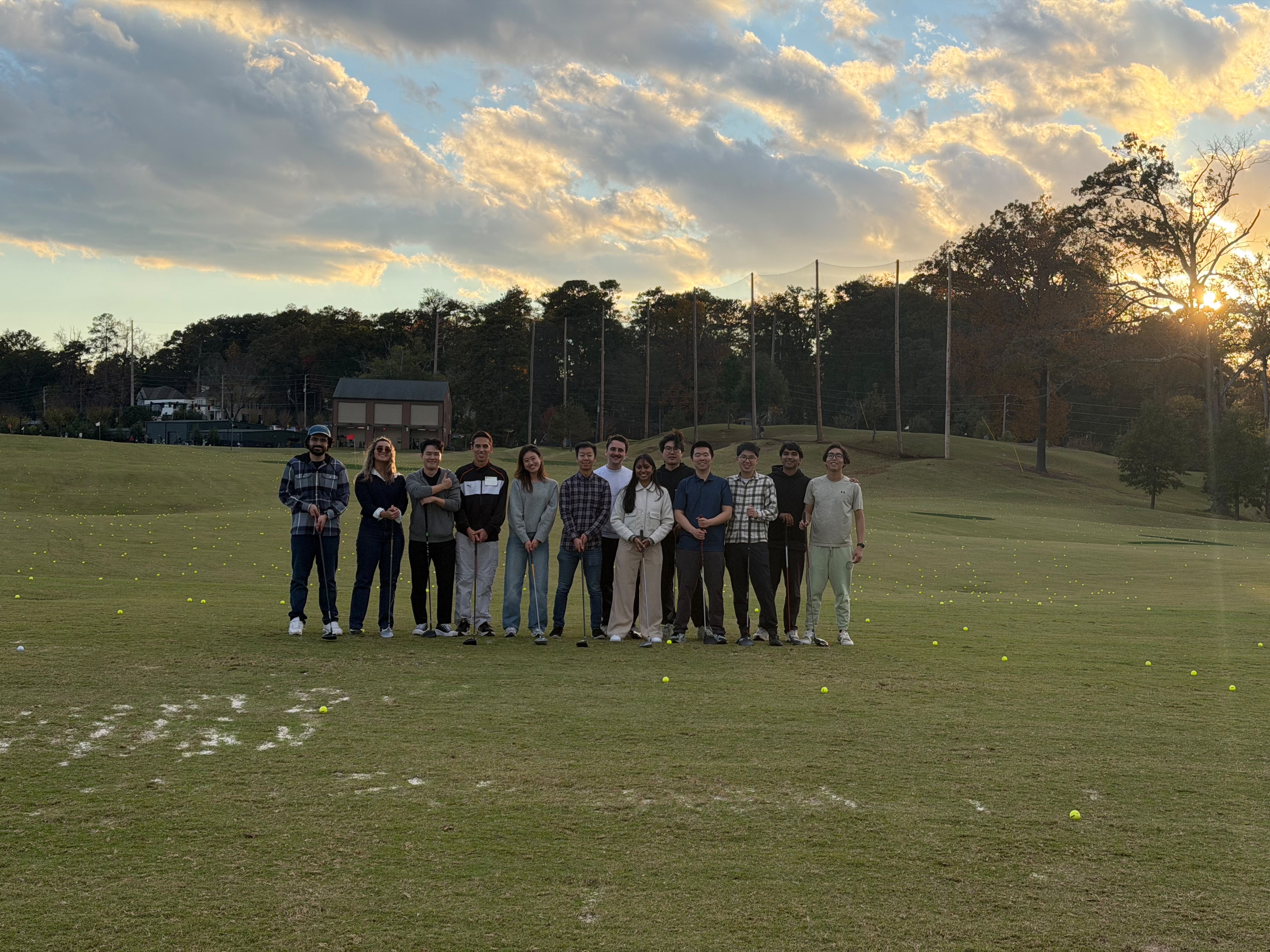
Following the Day 1 planning sessions at Bobby Jones Golf Course, members gathered for putting, dinner and time with colleagues from Georgia Tech, the University of Southern California and the University of California, Berkeley.
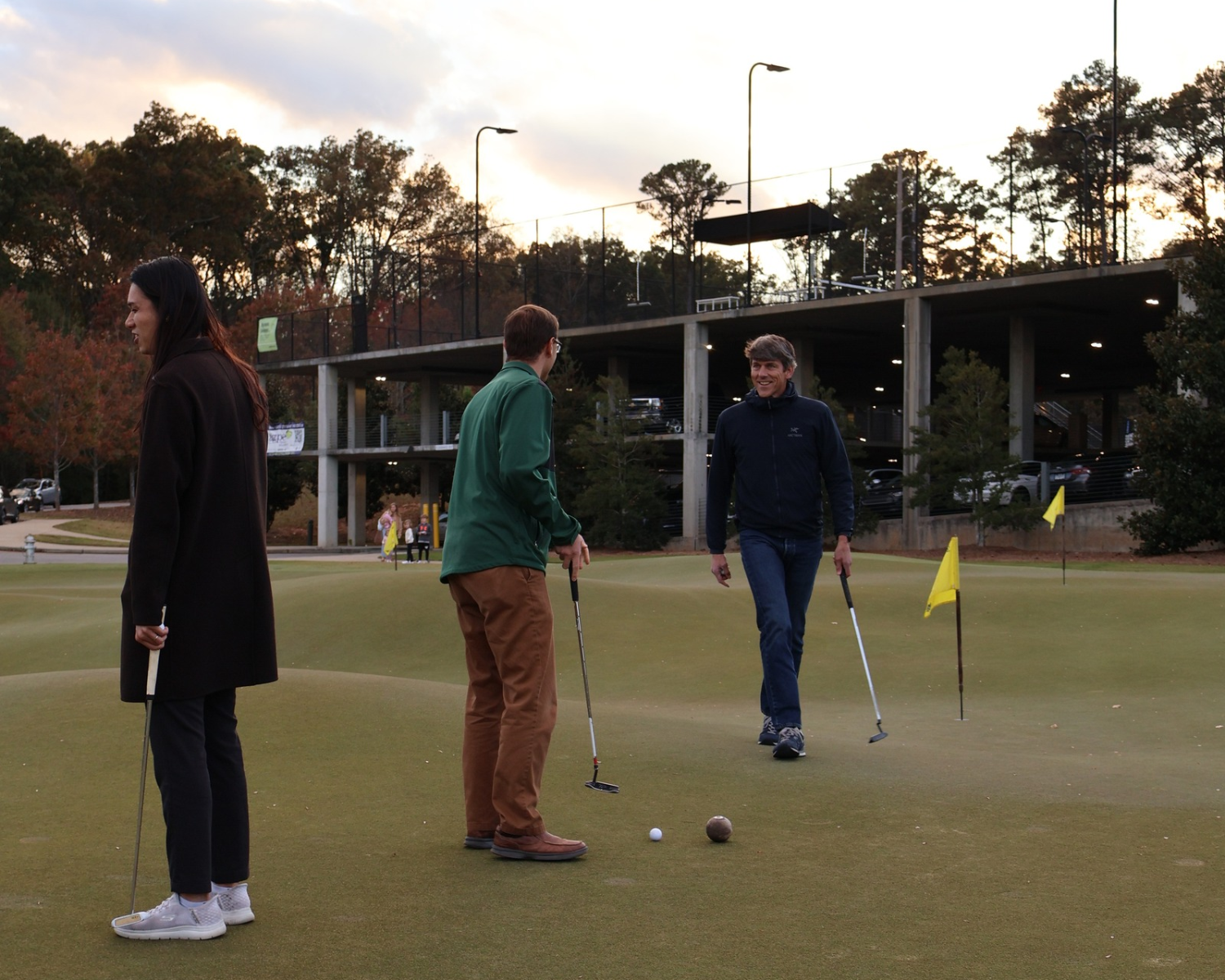
The Student Leadership Council began the evening with golf lessons before joining the full Institute for social a hour and dinner.
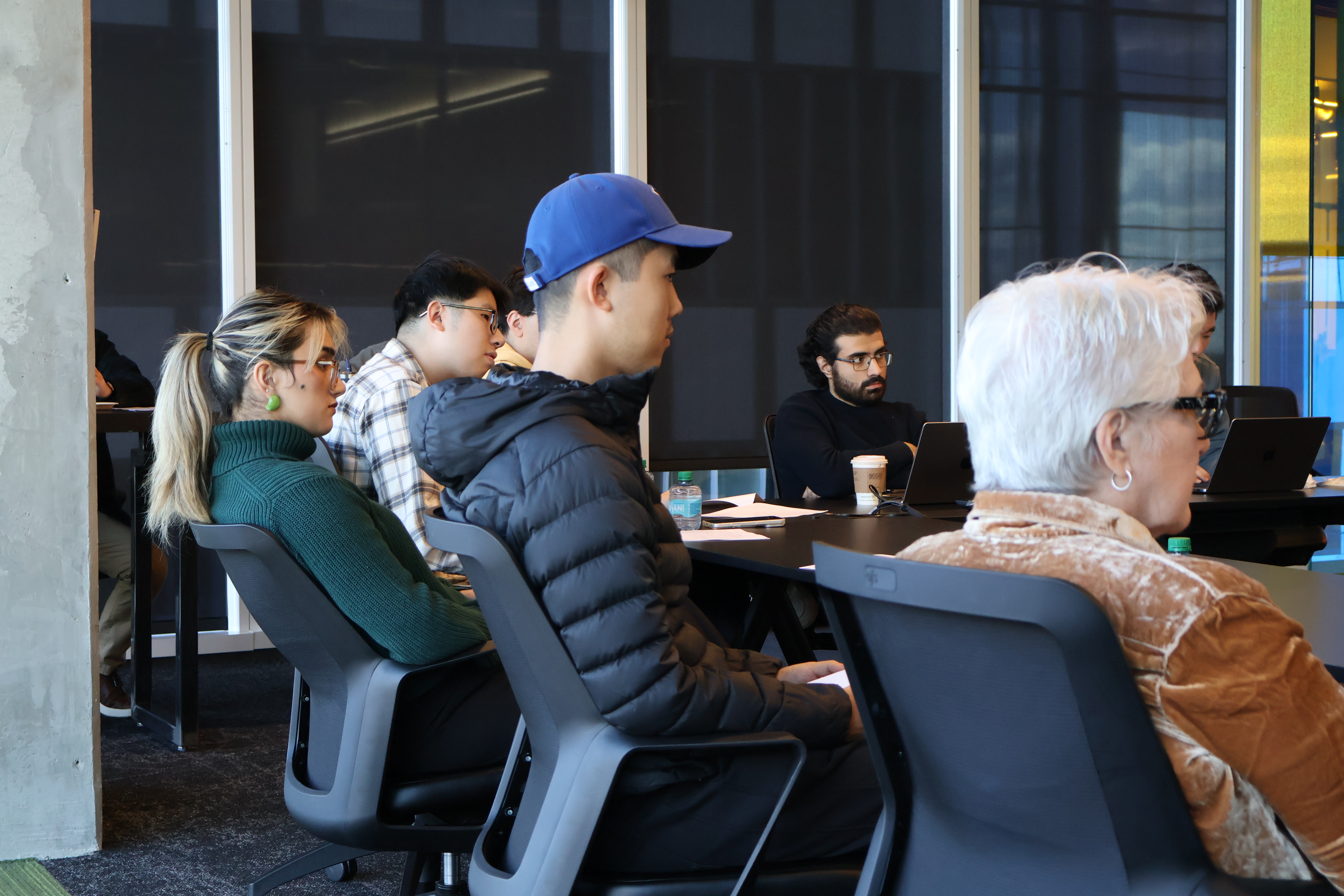
Day 2 continued that focus on collaboration. Following presentations from pillar leads, a student poster session showcased research from across the Institute. The day ended with a Student Leadership Council meeting and dedicated collaboration time.
With a shared research vision, long-term goals and a community spanning three universities and countless partners, AI4OPT enters its next five years ready to move from ambition to action. “It was an incredibly productive kickoff retreat for AI4OPT-II,” said AI4OPT Director Pascal Van Hentenryck. “Seeing the pillars articulate a 5-year vision with milestones after the first and the third year was a unique experience in planning and innovation, and I am so grateful to be working with such a collection of brilliant scientists.”
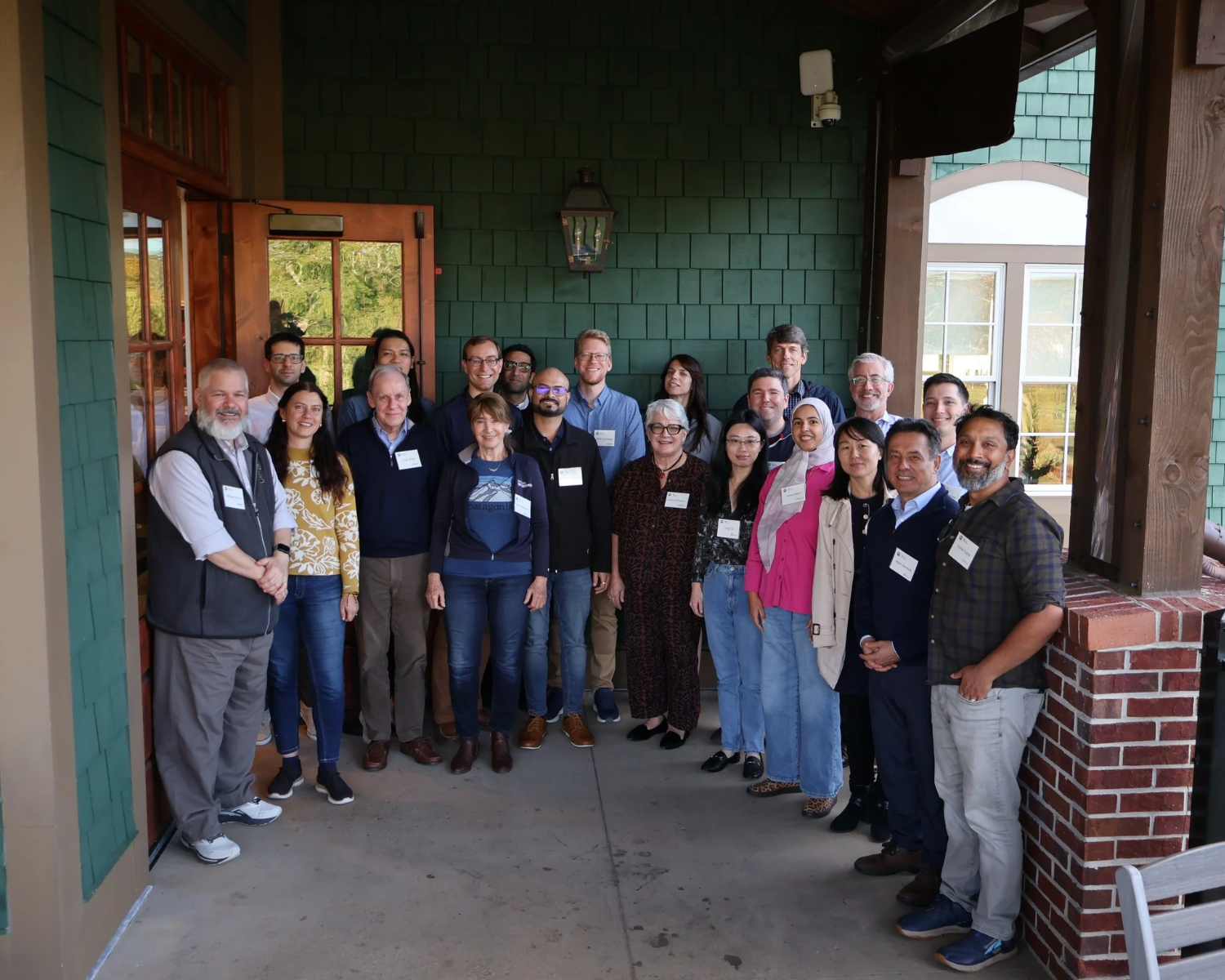
Members gather for a group photo on Day 1 of the retreat.

