
For many students learning artificial intelligence, the biggest challenge is not understanding the concepts. It is gaining access to the computing resources needed to bring those concepts to life.
During the 2026 Seth Bonder Camps, students gained hands-on experience with advanced AI tools and models through a collaboration between AI4OPT, Georgia Tech’s Partnership for an Advanced Computing Environment (PACE) and the AI Makerspace. The partnership provided students with access to NVIDIA H200 GPUs, enabling them to explore deep learning, generative AI and other computationally intensive applications using technologies similar to those used in today’s AI research.
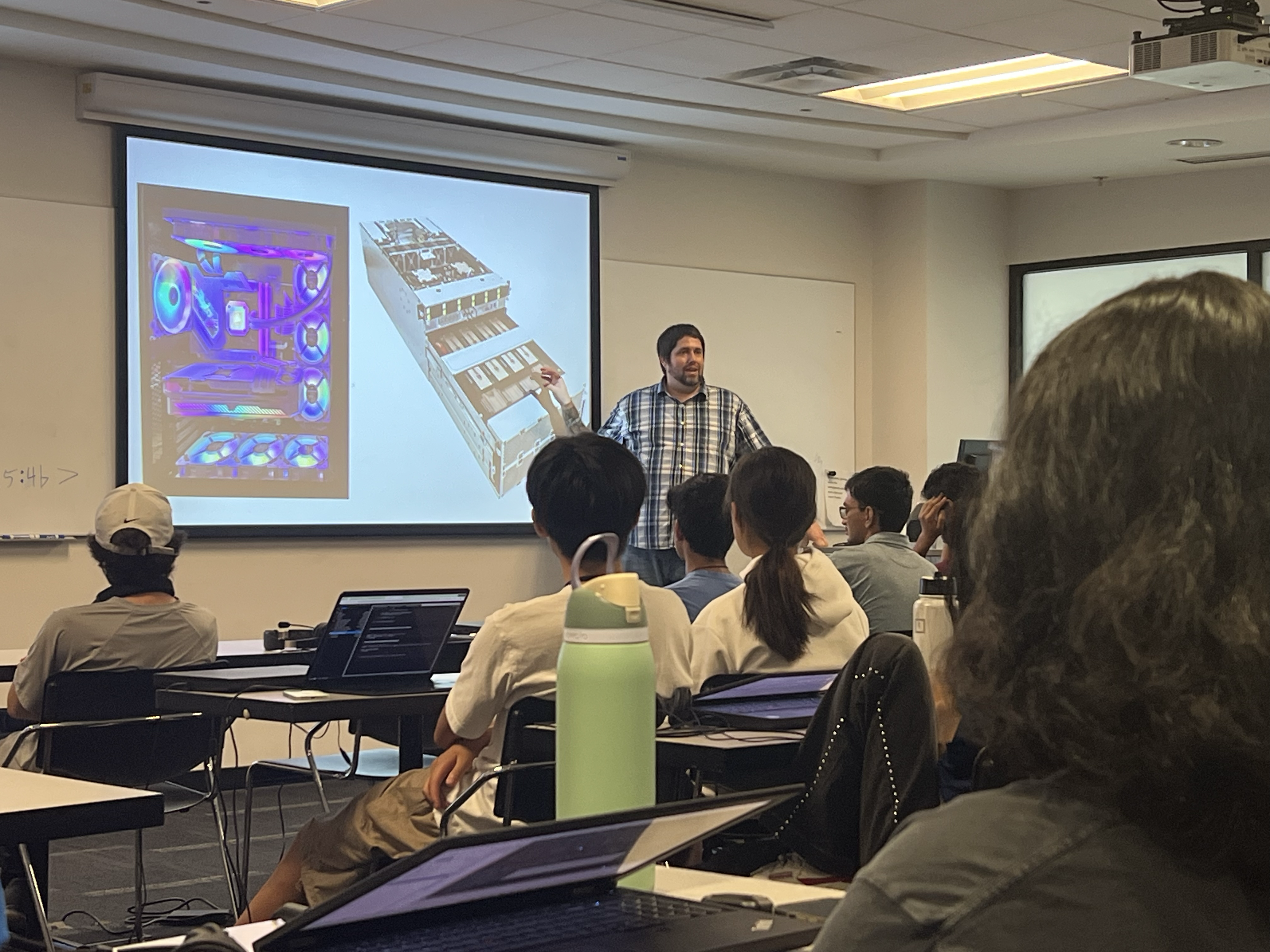
The Seth Bonder Program in Computational and Data Science for Engineering introduces high school students to computer science, engineering and artificial intelligence through meaningful, real-world applications. As AI continues to evolve, providing students with access to advanced computing infrastructure is essential to preparing the next generation of innovators.
“Using this model, the AI Makerspace or other high-performance computing (HPC) resources can provide students with the GPU resources to complete the AI classes in a reasonable time frame, or in some cases, the material could not be completed without the provided GPUs,” said Brad Crawford (PACE/AI4OPT), senior research scientist, AI solutions architect and IT manager.
AI Education Powered by HPC
Through the collaboration with PACE and the AI Makerspace, Seth Bonder Camp students gained access to enterprise-scale AI infrastructure:
- 56 NVIDIA H200 GPUs utilized
- 7 GPU nodes reserved
- 50 student GPU resources available
- 6 support GPUs for teaching assistants and staff
Removing Barriers Through Accessible Computing
One of the biggest challenges in bringing HPC resources into K-12 classrooms is accessibility. Many students use school-provided devices with restrictions that prevent the installation of specialized software required for traditional computing environments.
PACE helped address these challenges by enabling browser-based access to powerful computing resources, allowing students to begin learning without the technical barriers often associated with advanced computing environments.
"The U.S. faces a serious shortage of highly skilled high-performance computing-trained professionals in fields like AI, cybersecurity, biomedical research and national defense," said Vernard Martin, senior director of Research and Academic Computing. "Early exposure creates a generation of students who arrive at university and industry already fluent in parallel computing concepts."
By providing students with direct browser-based access to HPC resources, the program allowed participants to focus on learning AI concepts, developing computational skills and exploring new ideas rather than troubleshooting software issues.
Building Reproducible AI Learning Environments
Behind the student experience, containerization and reproducible computing environments played a critical role in creating a consistent and reliable learning environment.
“Software containerization combined with automated testing as the code or its dependencies change is critical to ensuring the code is functional and reproducible,” said Crawford.
The AI Makerspace environment allowed students to automatically access consistent software and hardware configurations, eliminating many of the challenges associated with setting up GPU-based AI workflows.
“Containers act as somewhat of a time capsule as they are a self-contained OS with their additional software that can be run in the future with the exact same code,” said Crawford.
This approach ensured students could reproduce their work, collaborate effectively and focus on developing their understanding of AI rather than managing complex technical setups.
Preparing the Next Generation of AI Innovators
Access to NVIDIA H200 GPUs gave Seth Bonder Camp students the opportunity to work with infrastructure similar to what is used in advanced AI research and industry settings.
For Aaron Jezghani, senior research scientist with PACE, providing this level of access is about more than technology. It is about expanding participation in AI and making advanced tools available to a broader community.
"An educational framework that can be run by anyone, not just Georgia Tech, and anywhere, not just on the AI Makerspace, democratizes this expertise and brings together a wider audience to the AI discussion,” Jezghani said.
Through collaboration between AI4OPT, PACE, the AI Makerspace and Georgia Tech partners, the Seth Bonder Camps demonstrate what is possible when powerful computing resources meet innovative education.
By expanding access to AI tools and infrastructure at Georgia Tech.
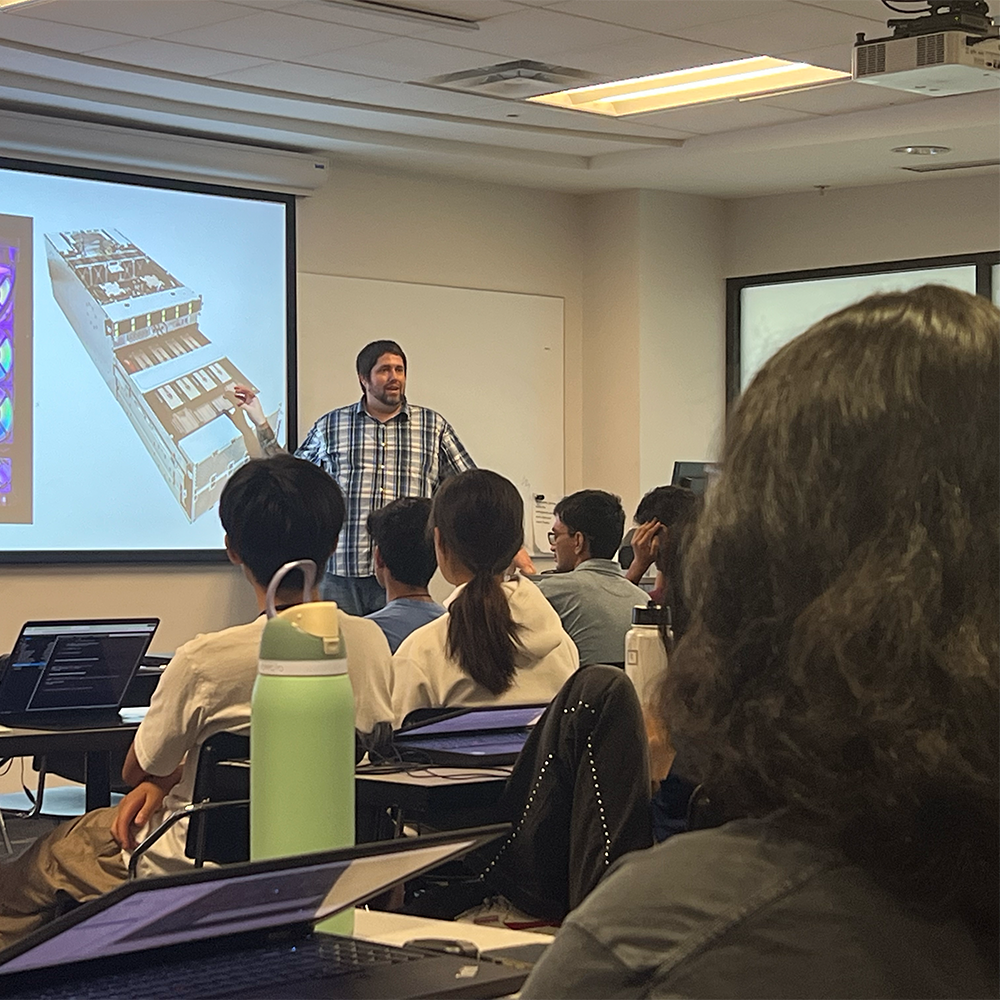
Seth Bonder Camp 2026

